

StartFragment## At a Glance: The Garage Stats
| Metric | Details |
| :--- | :--- |
| The Hacker | Palmer Luckey |
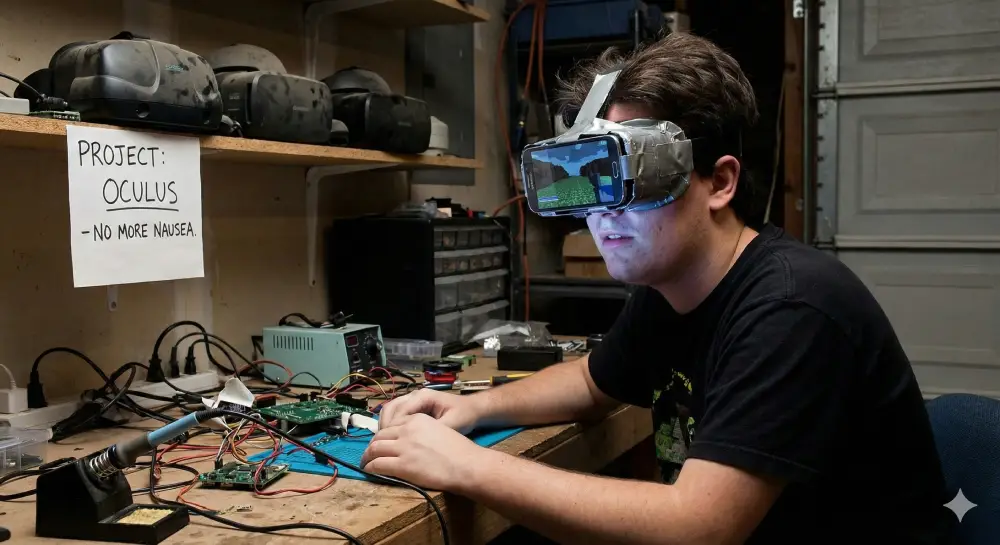
| The "Low Point" | Tinkering with 50 broken, vomit-inducing 90s headsets in a Long Beach garage |
| The Gamble | Dropping out of journalism school to chase a "dead" technology |
| The Catalyst | Raising $2.4 Million on Kickstarter in 30 days |
| The Acquisition | Sold to Facebook for $2 Billion at age 21 |
## The Hook: The Nausea and the Obsession
In 2011, Silicon Valley considered Virtual Reality a graveyard. It was a failed 1990s gimmick—bulky, heavy, and practically guaranteed to give you "simulator sickness."
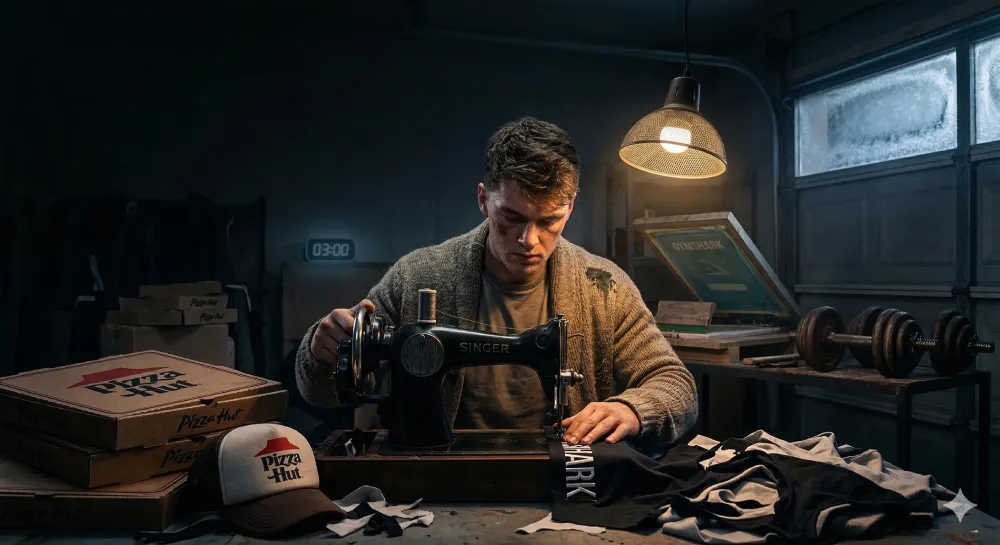
Palmer Luckey didn't care what the experts thought. He was a self-taught, 16-year-old engineering nerd living in Long Beach, California. He didn't have a corporate R&D lab; he had his parents' garage. Inside that garage, he hoarded over 50 vintage VR headsets.
Night after night, he took them apart. He was frustrated by the laggy tracking and the blurry, low-resolution screens that made his stomach churn. Palmer realized something profound: if the massive tech corporations weren't going to build the sci-fi future he dreamed of, he was just going to have to duct-tape it together himself.
## The Struggle: Cell Phone Parts and a Crazy Bet
Palmer wasn't a wizard; he was just remarkably observant. He noticed that the smartphone industry had inadvertently created the exact parts VR needed to survive: cheap, feather-light, high-resolution screens and tiny gyroscopes.
He ripped apart smartphones and built his own lightweight prototype. He called it the Oculus Rift.
The feeling of putting it on was magical. It didn't just put a screen in front of your face; it gave you presence. You were suddenly standing inside the game.
Believing he was sitting on a goldmine, Palmer made a terrifying gamble. He dropped out of his journalism program at California State University. He launched a Kickstarter, hoping to scrape together enough money to send prototype kits to a few fellow nerds.
He asked the internet for $250,000.
In 30 days, over 9,000 backers handed him $2.4 million. The garage hacker had accidentally started a global revolution.
## The Turning Point: The Billion-Dollar Demo
The true genius of Oculus wasn't the plastic headset. Palmer knew the hardware would eventually be copied. The real empire was the software. Oculus was a new ecosystem—a place where developers could build the "Netflix of the 2010s," creating mind-bending games and virtual social spaces.
In 2014, Mark Zuckerberg walked into a private room to test the Oculus Rift. Zuckerberg strapped the headset onto his face, scanned the virtual room, and was completely blown away.
Zuckerberg realized that VR wasn't just a gaming peripheral; it was the next computing platform. If he didn't own it, Facebook would be left behind. Just two years after Palmer Luckey launched his Kickstarter, Zuckerberg wrote him a check for $400 million in cash and $1.6 billion in stock. At 21 years old, the kid who just wanted to fix a blurry screen became a billionaire overnight.
## 3 Lessons for Founders
### 1. The Best Ideas Cure a Headache
Palmer Luckey didn't start with a business plan; he started by fixing a painful problem. He hated the nausea of old VR, so he fixed the latency. When you solve a genuine frustration for yourself, you often solve it for millions of others.
### 2. Predict the Shift Before the Suits Do
Luckey saw the future clearly. In 2012, long before the buyout, he publicly predicted that VR would be "as common as smartphones within a decade." He bet heavily on Moore’s Law making sensors cheaper. Build for where the world will be in five years, not where it is today.
### 3. Software Builds Empires
Hardware grabs the headlines, but software prints the money. Luckey knew that while building headsets was hard, the Oculus SDK and App Store would generate billions in recurring digital revenue. The plastic gets them in the door; the ecosystem locks them in.\
Frequently Asked Questions
Did Palmer Luckey know he was going to sell the company?
Is Palmer Luckey still working at Meta (Facebook)?
Was Zuckerberg's $2 Billion bet actually worth it?
Share this article